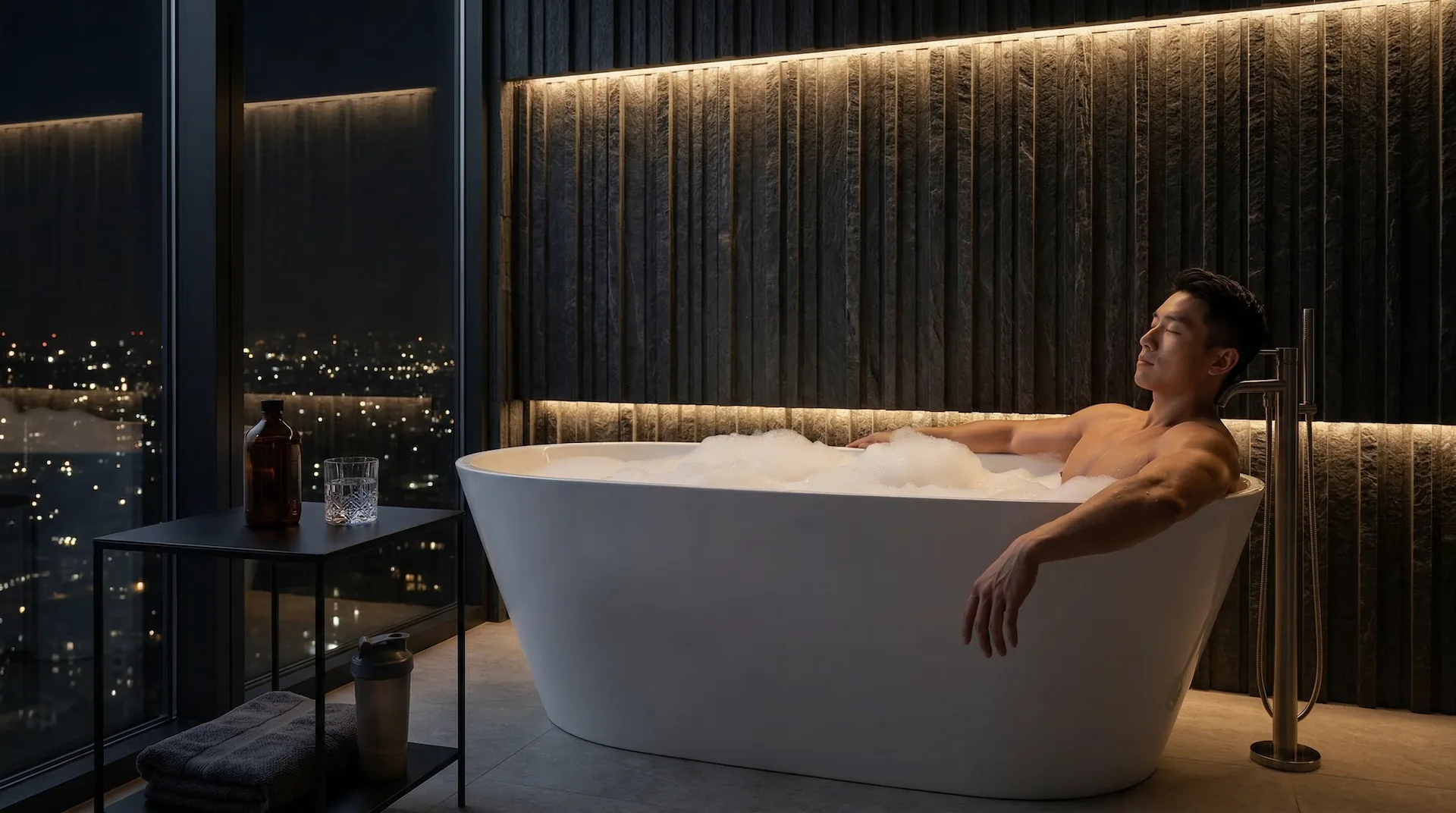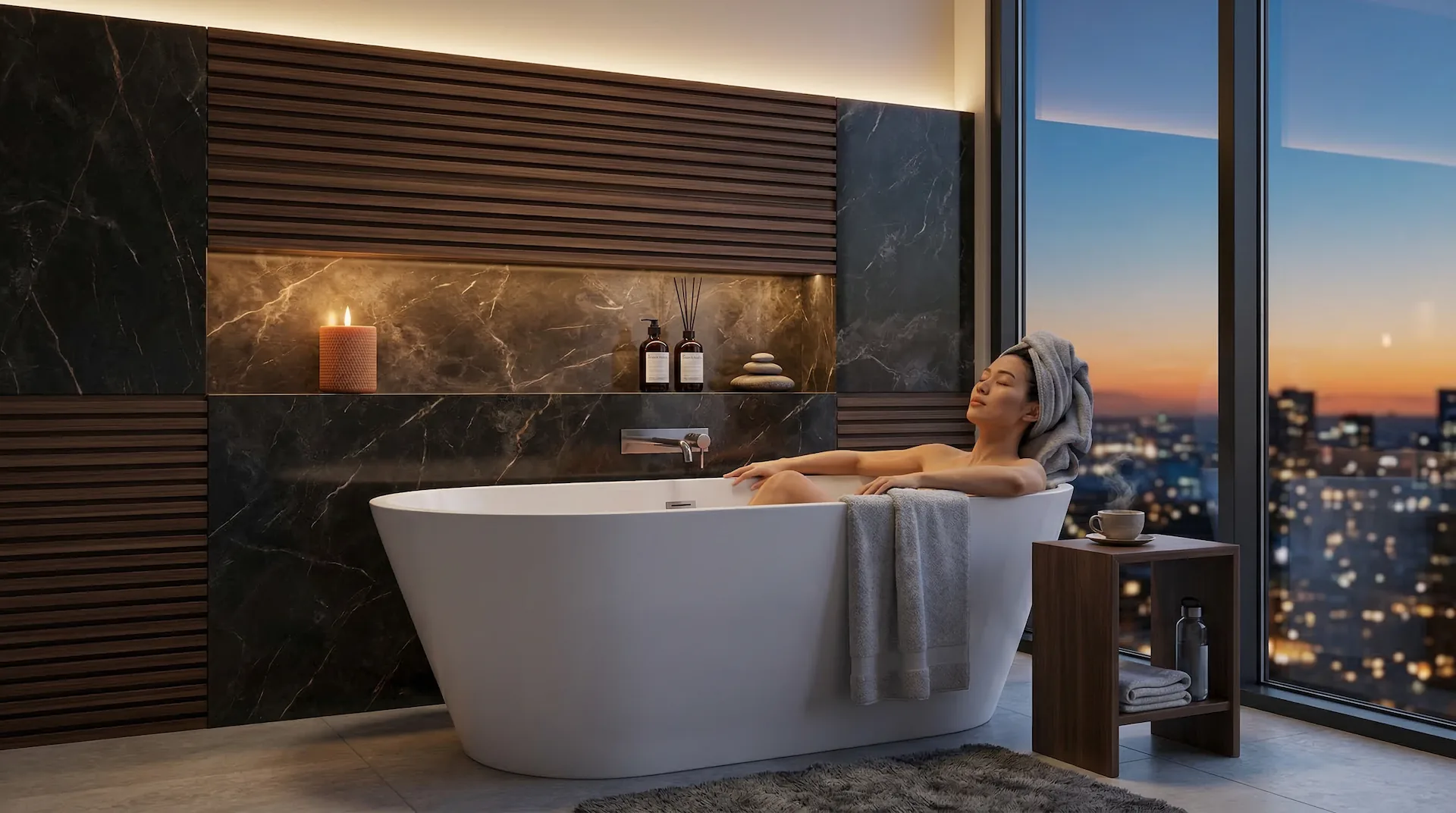
The most common question we hear at the showroom isn’t about price, finish, or material. It’s a single sentence, usually said with a bit of guilt: “Can I even fit a bathtub in my HDB?” The answer is yes, more often than people think. But not always, and the difference is worth understanding before you commit.
The honest answer (before we get into the details)
Most HDB bathrooms can accommodate a bathtub. The popular belief that they can’t is a holdover from a generation of renovations where contractors defaulted to a glass-screened shower because it was easier to spec, easier to plumb, and easier to upsell as “modern.”
But there are real constraints. Your common bathroom is roughly the size of a small walk-in wardrobe. Your master bathroom is often only marginally larger. The drain is in a fixed spot. The water heater eats wall space. The door swings inward. And the corridor outside the door is barely wider than your shoulders.
None of these are dealbreakers. They’re design parameters. The right tub for a 4-room HDB is not the same tub you’d buy for a freehold landed in Bukit Timah, and the homeowners who get this right are the ones who start with the constraints and shop accordingly, not the other way around.
HDB bathroom dimensions: what you’re actually working with
HDB bathroom sizes vary by flat type, era, and whether you’re looking at the common bathroom or the master. A few rough ranges to set expectations, these are typical, not guaranteed, so always measure your own:
- 3-room flats: Common bathroom around 3 to 4 sqm. Master bathroom (if present) only slightly larger.
- 4-room flats: Common bathroom around 3.5 to 4.5 sqm. Master typically 4 to 5 sqm.
- 5-room and executive flats: Master bathrooms can run 4.5 to 6 sqm, with a few generous outliers.
- Newer BTOs (post-2015): Often more rectangular and a touch smaller than older flats, efficient on paper, awkward in practice for tubs.
The number that actually matters isn’t the floor area. It’s the longest unobstructed straight wall. Most freestanding tubs need a clear run of at least 1.5 metres along one wall, with another 60 cm of clear floor in front for getting in and out comfortably. If you have that, you’re in the game.
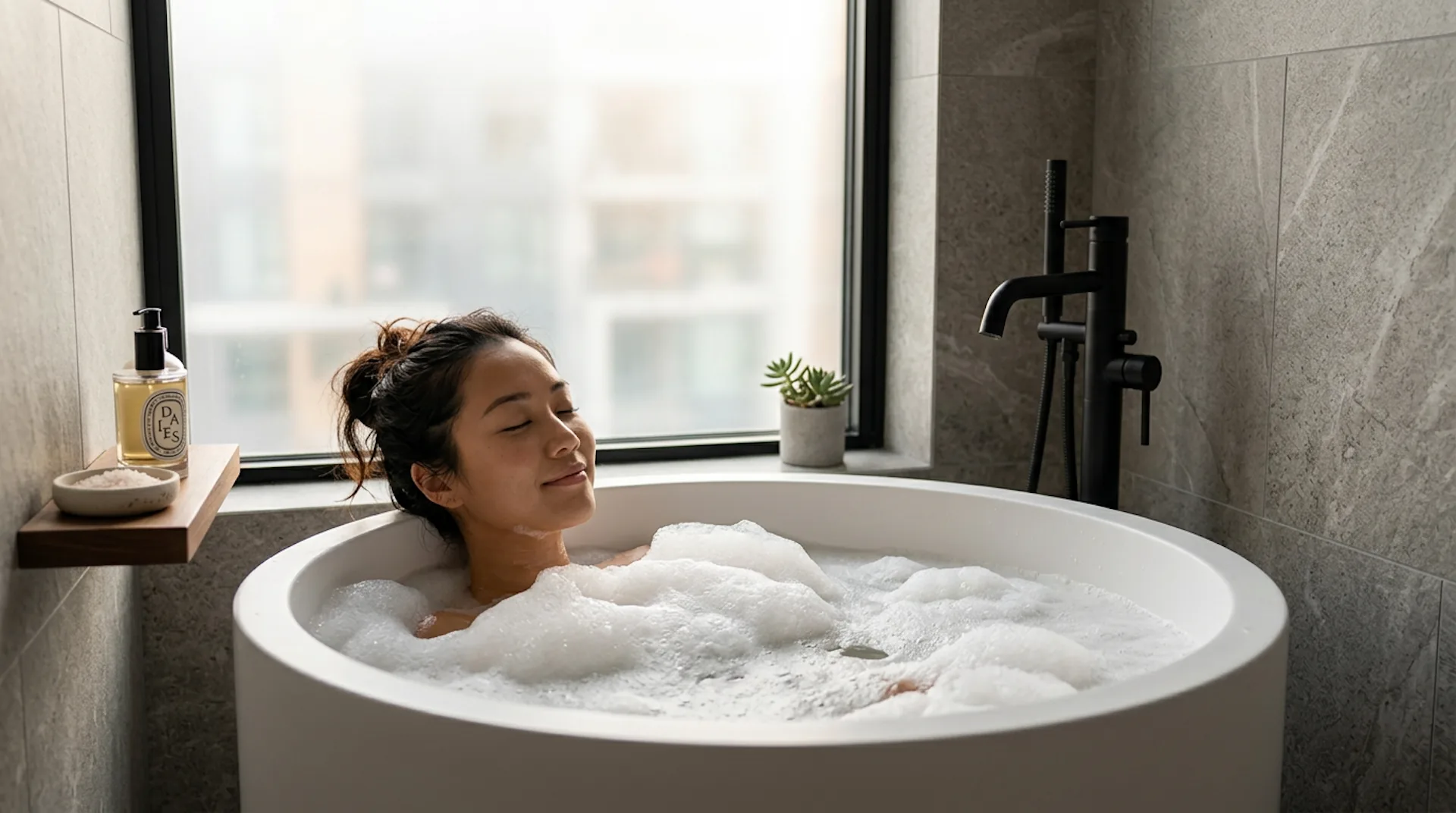
Tub shapes that actually fit small spaces
The freestanding bathtubs you see in glossy renovation magazines are usually the wrong shape for an HDB. They’re long, rectangular, and designed to sit in the middle of a bathroom the size of a small bedroom. Beautiful, but irrelevant if you’re renovating a 4-room.
Here’s what works in tight spaces:
Compact ovals (around 1.4 to 1.5 m)
The single most useful tub size for HDB bathrooms. Long enough to actually soak in, short enough to fit along the back wall without eating the entire floor. Most adults can stretch out comfortably; taller users (above 1.8 m) will need to bend their knees.
Round or drum tubs (around 1.2 to 1.3 m diameter)
Surprisingly comfortable for one person if you sit upright with your knees up. The footprint is small enough to tuck into a corner. Best for people who want the ritual of a soak more than they want the stretch-out luxury of a long bath.
Slipper or alcove tubs
Built-in tubs designed to sit between three walls. Cheaper to install, easier to clean around, and visually unobtrusive. The trade-off is that they look like every other bathtub built in the 1990s, you lose the “wow” factor a freestanding piece gives you.
If you’re unsure which shape suits your bathroom, our Fit Calculator walks through it in about a minute. Plug in your wall lengths and it’ll show which of our tubs are physically possible, before you fall in love with one that isn’t.
The plumbing reality nobody warns you about
The single biggest reason a tub doesn’t end up in an HDB isn’t space, it’s plumbing. Specifically, where the existing floor drain sits and how willing your contractor is to relocate it.
HDB regulations restrict major changes to your wet areas. Floor finishes are often sealed against the original waterproofing membrane, and altering the drain involves hacking the screed, re-laying waterproofing, and re-screeding. It can be done. It’s just expensive and slow.
Freestanding tubs typically need a drain in a specific position relative to the tub footprint. If your existing drain is more than around 30 cm from the planned drain location, you have three choices:
- Reposition the drain, cleanest result, but adds cost and renovation time.
- Use a pump-out tub, some modern tubs have a small electric pump that lifts wastewater to a higher drain. Effective, but adds a mechanical part to maintain.
- Choose a tub model whose drain matches, often the simplest path. We position our HDB-friendly models with this in mind.
Hot water supply matters too. If you’re running an instant heater, check the flow rate. A typical 6 kW unit will fill a small tub fine; a 4 kW unit will leave you waiting and the water will go lukewarm. Storage heaters are usually fine, provided the tank is sized for the tub volume.
Doorway and corridor clearance: getting it in
This one catches a lot of people. The tub has to physically arrive in the bathroom, which means it has to fit through your unit door, down your corridor, and through your bathroom door.
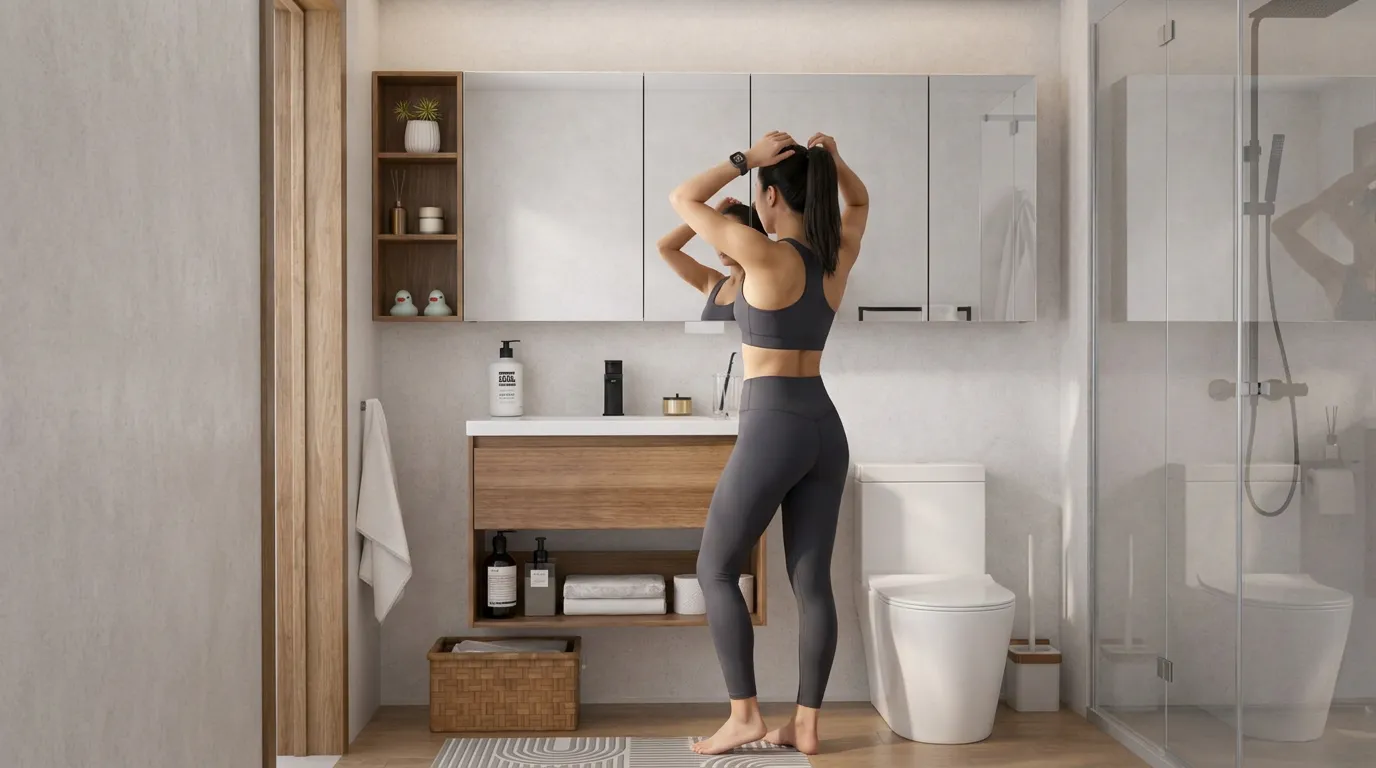
HDB unit doors are typically around 80 to 90 cm wide. Bathroom doors are often narrower, sometimes 70 cm. Most freestanding tubs ship in a single piece, so the narrowest doorway on the path determines what can come in.
Before you order anything, do this:
- Measure every doorway between your lift lobby and your bathroom.
- Measure the diagonal as well, sometimes a tub that won’t go in vertically will tilt through.
- Note any tight corners in the corridor where you’d need to pivot the tub.
- Confirm with the supplier what the actual shipping dimensions of the tub are (not the bathing dimensions, they’re different).
If a tub physically can’t make it in, you’re left with two options: a sectional tub that ships in pieces and assembles on site (rare, and the seams need watching), or removing a door temporarily during delivery.
How to fit-check before you commit
The single best thing you can do before buying any tub is a tape-and-cardboard fit check. It costs nothing, it takes ten minutes, and it has saved more renovations than any 3D rendering.
Cut a piece of cardboard or kraft paper to the exact footprint of the tub you’re considering, length, width, and a clear 60 cm of stand-up space at the access side. Lay it on your bathroom floor. Walk around it. Open the door against it. Sit on the floor next to it.
Things you’ll discover that no spec sheet warned you about:
- The door won’t open all the way once the tub is in.
- The toilet roll holder is exactly where the tub edge wants to be.
- You can’t bend over to clean behind it.
- Or, more often: this is going to work, and the room actually feels bigger with a tub than it did with a glass shower screen.
If you’d rather skip the cardboard step, our AR visualiser lets you place a virtual tub in your real bathroom through your phone camera. It’s not a substitute for measuring, but it’s a much better starting point than guessing.
When NOT to fit a tub
For honesty’s sake: there are situations where a bathtub is the wrong call.
- You only have one bathroom and a young household. Mornings will be a queue. A shower is faster.
- The bathroom is the only access to a yard or service area. Don’t block your own circulation.
- You don’t actually take baths. If you can’t remember the last time you wanted to soak, the tub will become a very expensive shower with high sides.
- The plumbing rework would push you over budget elsewhere. A bathtub is worth it when the bathroom is a place you want to spend time. It’s not worth it if it forces you to compromise on the rest of the renovation.
If any of these apply, a beautifully designed walk-in shower with a high-quality vanity will give you more daily satisfaction than a tub you don’t use.
Next step
If you’ve read this far, you’re probably leaning yes. The two things worth doing now: run the Fit Calculator with your wall measurements to see what physically fits, and browse our HDB-friendly tubs, the ones we’ve specifically designed and stocked for the spaces most Singaporean homes actually have.
If you’d rather have someone walk through it with you, our team does free site visits in Singapore. We’ll measure your bathroom properly, check your plumbing access, and tell you straight whether a tub makes sense, including when it doesn’t.