Freestanding tubs look better in photos. Built-in tubs are easier to live with. That sentence covers about eighty percent of the decision, but the remaining twenty percent is where homeowners get tripped up. Here’s the full picture, the way we’d explain it to a friend.
Quick verdict, before the details
If you have the space, the budget, and you actually take baths, freestanding wins on feel, flexibility, and the moment you walk into the room. If you’re working with a tight footprint, a tighter budget, or a household that uses the tub mostly as an oversized shower base, built-in is the smarter call. The difference isn’t about style. It’s about how you live.
The rest of this post unpacks the seven things that matter when you’re actually choosing.
1. Visual and spatial impact
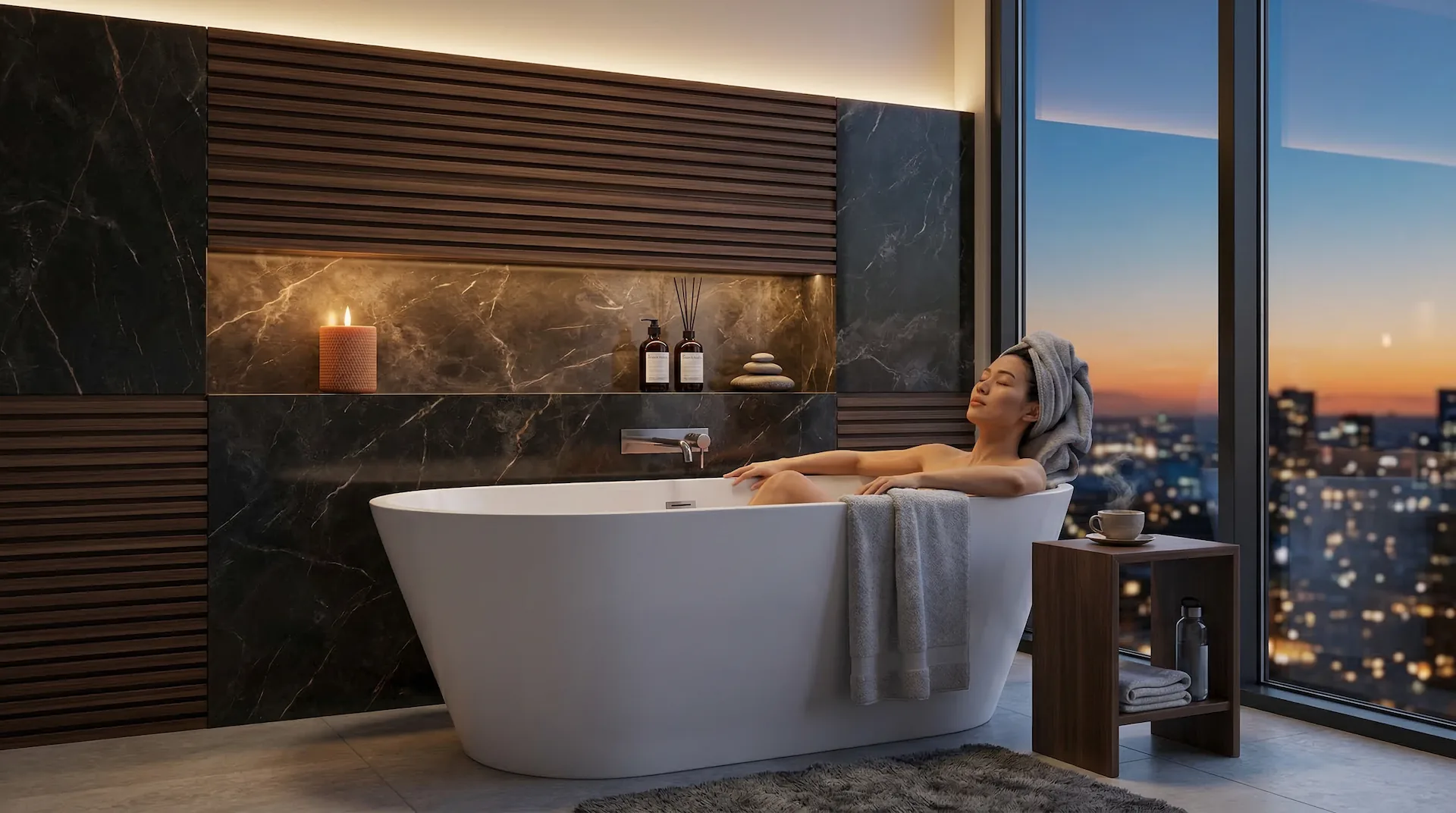
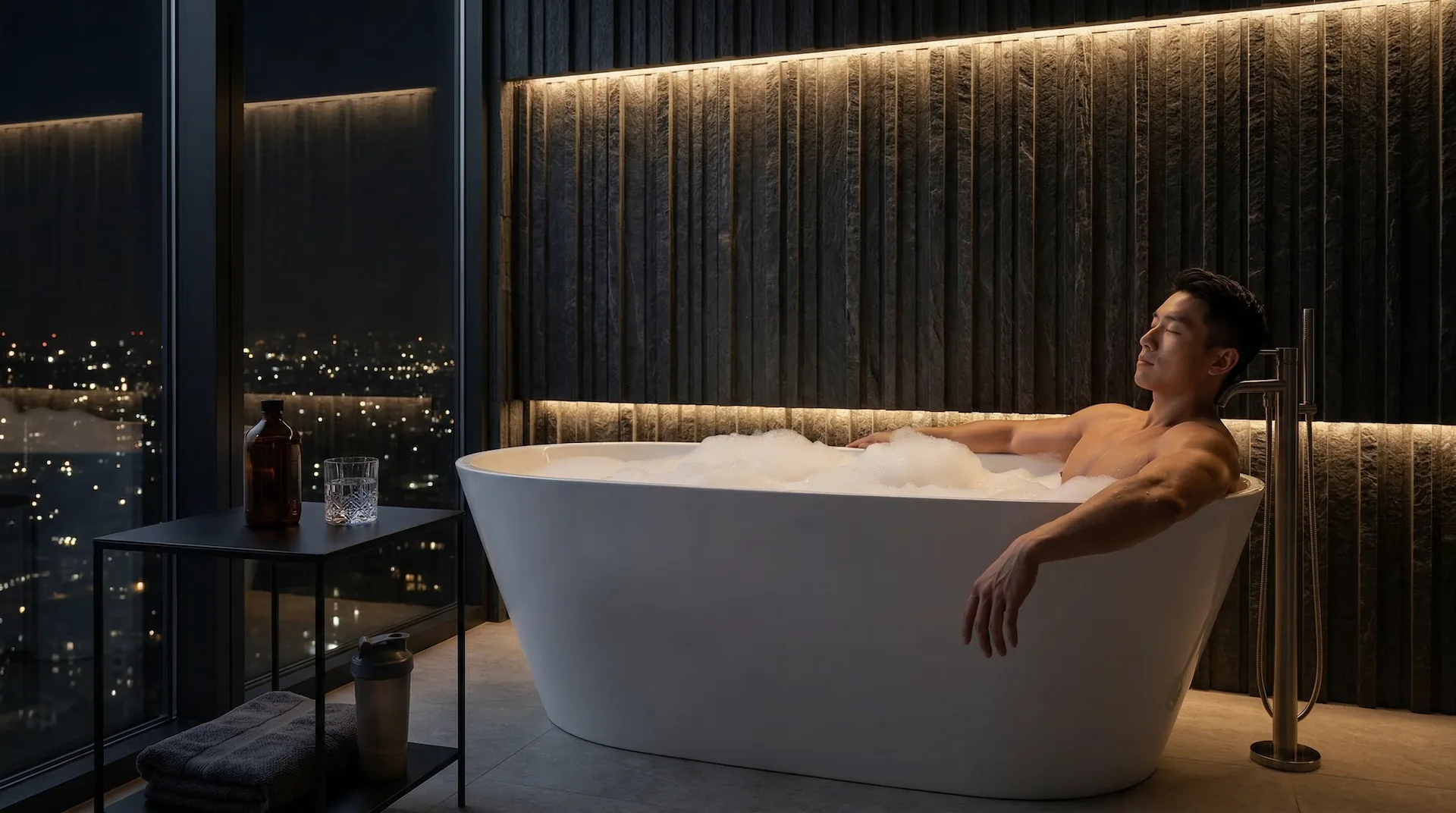
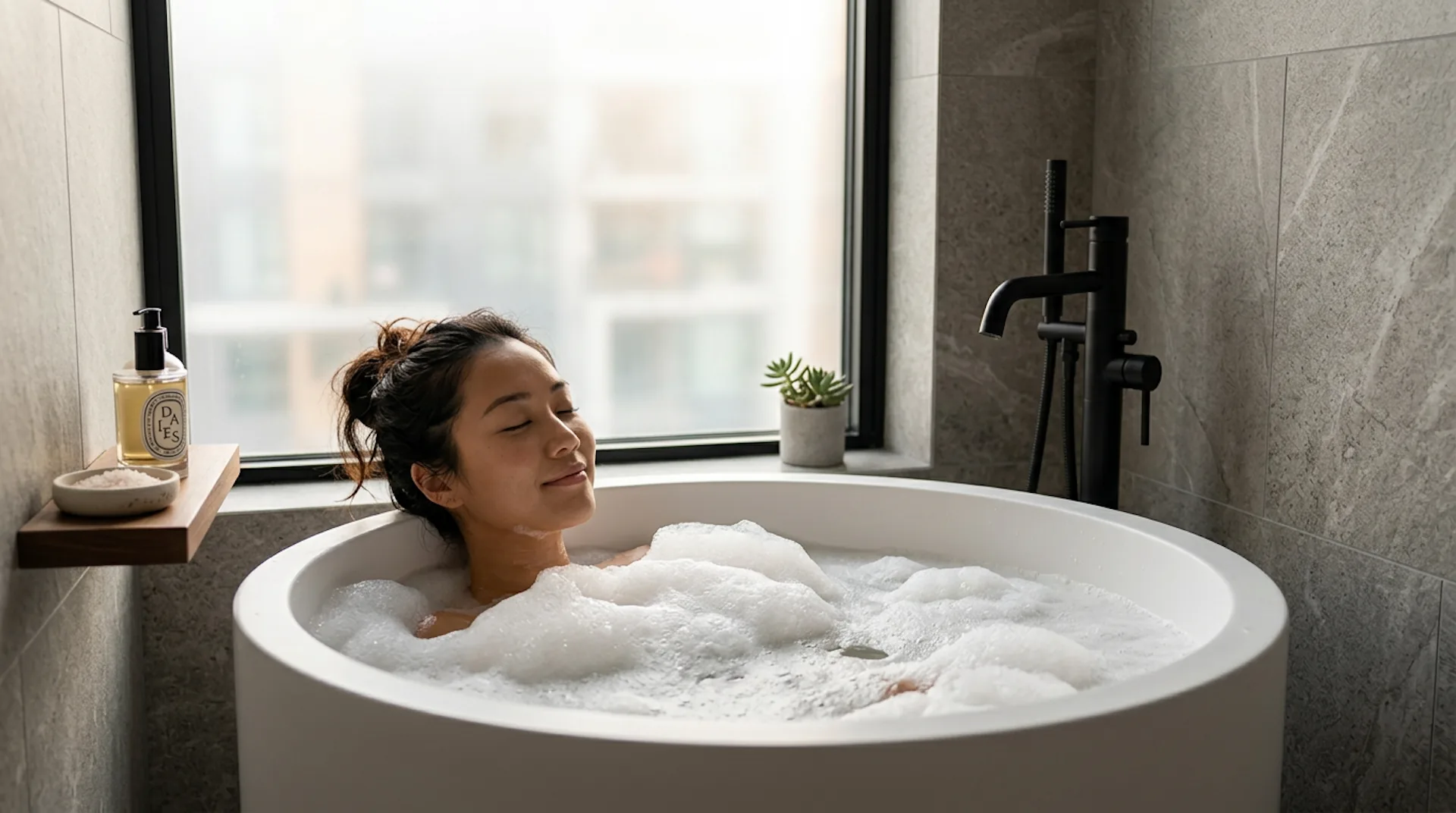
A freestanding tub does something a built-in can’t: it makes the room feel curated. The tub becomes an object you walk around, not a fixture you walk past. Even in a small bathroom, the negative space around a freestanding piece reads as luxury rather than waste.
A built-in tub, by contrast, disappears into the architecture. That’s a feature, not a flaw, in a tight space, you often want fewer focal points, not more. A clean alcove with good tile work and a frameless glass screen reads as calm and contemporary.
2. Installation cost and complexity
Built-in tubs are cheaper to install, almost always. The tub itself can be the same price as a freestanding equivalent, but the surround, the tiled enclosure, the access panel, the apron, is straightforward carpentry and tiling work that any contractor knows how to do.
Freestanding tubs add cost in three places:
- Plumbing positioning. The drain and water inlets have to come up through the floor in exactly the right spot. Get it wrong by 20 mm and you’re re-coring the floor.
- Floor reinforcement. A filled freestanding tub plus an adult is heavy. In older HDB flats with thin screed, this is rarely an issue, but it’s worth raising with your contractor.
- Specialist install. Some freestanding tubs need a custom delivery and placement crew. Built-in tubs ride on standard install workflows.
For a typical Singapore renovation, expect freestanding installation costs to run a few thousand dollars more than built-in. The exact figure depends on the floor and plumbing work, so this is one to confirm with your contractor before you commit.
3. Cleaning and daily maintenance
This is where built-in tubs win unambiguously. The seal between the tub and the wall is the only place water can collect, and a well-grouted alcove tub takes about a minute a week to keep clean.
A freestanding tub has a perimeter you have to clean around. Dust collects under the lip. Water marks form where splashes hit the floor. The drain area can develop a soap-scum ring if you don’t wipe it. None of this is a dealbreaker, but if “low maintenance” is the top of your list, factor it in.
The cleaning argument against freestanding is real, but it’s overstated online. Wiping around a tub takes about three minutes a week. The bigger maintenance issue in Singapore is mould on grout and silicone, and that affects built-in tubs more, because there’s more grout to manage.
4. Plumbing flexibility now and later
If there’s any chance you’ll renovate again in five to ten years, and most Singapore homeowners do, a freestanding tub is the more flexible long-term bet. The tub can move. The plumbing under it can be re-routed without ripping out tiled surrounds.
A built-in tub is essentially permanent. To remove or replace it, you tear out the apron, the surrounding tile, and often a chunk of the wall. It’s a small demolition job. Worth thinking about if you’re not sure how long you’ll stay in the unit.
5. Resale and future-proofing
This is one buyers love to debate and almost never agree on. Our take, after years in the Singapore market:
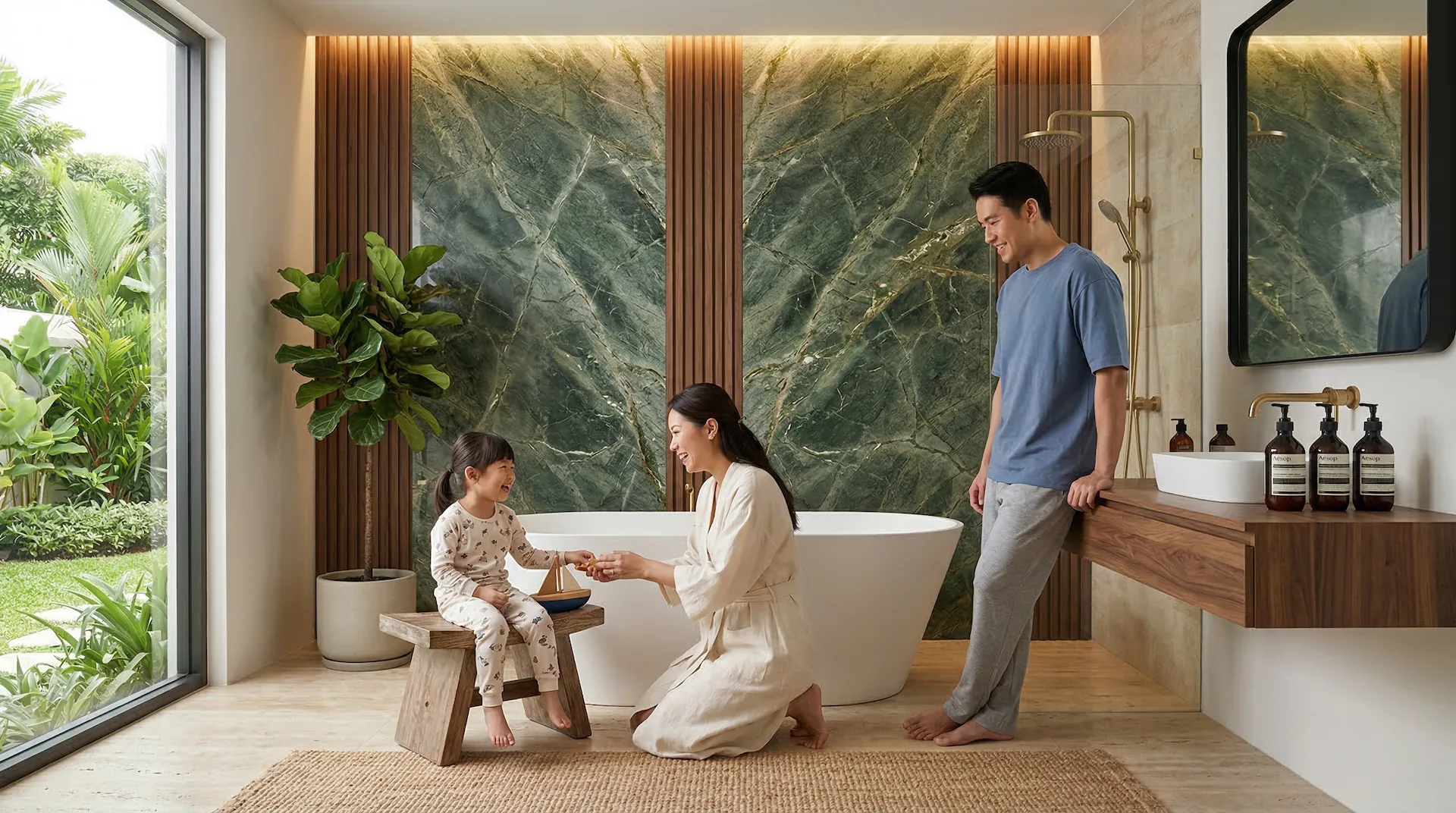
A well-chosen freestanding tub adds perceived value for buyers who want a “designer” feel, usually younger professionals, no kids, condos in the central region. A built-in tub is more universally accepted, especially for families with young children who’ll bathe the kids in it.
If you’re renovating to live, choose what you actually want. If you’re renovating to flip in three years, a clean built-in alcove is the lower-risk choice.
6. Which suits HDB vs condo vs landed
HDB flats
Both can work in a 4-room or 5-room. Built-in is more common because contractors default to it; freestanding is increasingly popular because compact oval and round tubs from brands designed for our market (ours included) actually fit. See our HDB bathtub fit guide for the dimensions to check first.
Condos
Master bathrooms in newer condos are often generous enough for a full freestanding tub. The bigger constraint is whether the developer pre-installed a built-in tub that you’re now considering tearing out, which adds demolition cost.
Landed homes
This is freestanding territory, full stop. The space is there. The plumbing flexibility is there. A freestanding tub in a landed bathroom returns the most visual impact for the dollar.
7. The decision matrix
If you’ve read this far and want a one-screen summary:
| What you care about | Freestanding | Built-In |
|---|---|---|
| Lower upfront cost | · | ✓ |
| Easier to clean | · | ✓ |
| Visual statement | ✓ | · |
| Future-proof, movable | ✓ | · |
| Best for young kids | · | ✓ |
| Best for solo soaks | ✓ | · |
| Easier resale (broad market) | · | ✓ |
| Easier resale (premium buyers) | ✓ | · |
| Works in tight spaces | Compact models only | ✓ |
If your row of ✓ marks lands mostly in the freestanding column, that’s your answer. If they land mostly built-in, don’t romanticise the freestanding option just because the photos look nicer. You’ll resent the maintenance.
One more thing: hybrid options
Worth knowing that there are middle-ground formats. A “drop-in” tub sits in a custom-built surround but has the seamless feel of a built-in. A semi-recessed tub sits with one long side against a wall but otherwise reads as freestanding. These are less common in Singapore but can be the right answer when neither pure format quite works.
If you’re torn between the two, come down to our showroom. Sit in both. The decision usually makes itself once you’ve felt the difference.